
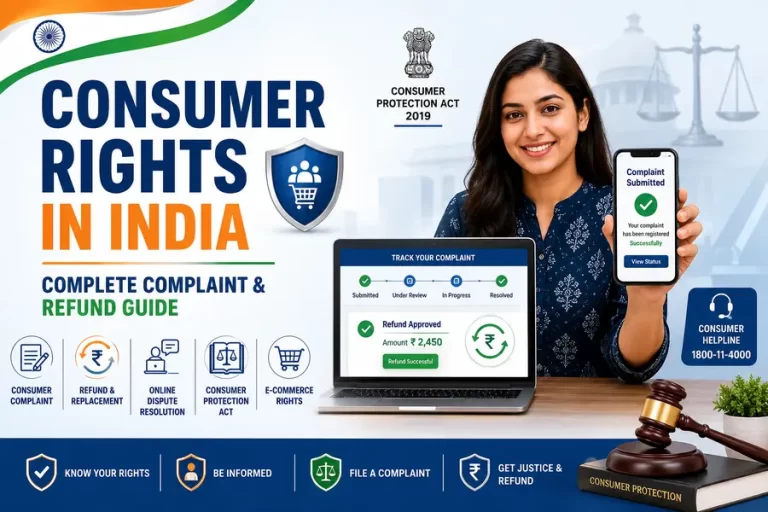
Every day millions of Indians buy things they need and services they want online and in stores. They do things like order food and other things they need at home using their phones. People book trips, buy new electronics sign up for things, like music and movies or hire people to do work for them. Indians are always dealing with businesses when they do these things.
While most transactions go well issues can still happen. Products can arrive broken or services might not be what you expected. Refunds can take a time and some companies do not respond to your worries. Problems, like damaged goods or unhappy customers can occur.
This is where consumer rights become important.
When we buy something we have rights that’re like a safety net. These rights make sure that we are treated fairly and that we get the information about what we are buying. If something goes wrong consumer rights give us a way to complain and get help. This is important because it helps to protect us from being taken advantage of. Consumer rights are there to help us, the buyers and make sure that we have an experience when we shop.
Consumer rights are really about making sure we are treated fairly. They help us trust the people we buy from. It’s all about being treated when we shop. Consumer rights make sure we get a deal. We can trust that the products we buy are safe and work as they should. That is what consumer rights are, about.
A lot of people who buy things do not know what they are allowed to do. This means they have a time when they have a problem with something they bought. Many consumers do not know their rights. That is why they struggle to resolve disputes, with companies that sold them things.
This guide is about consumer rights in India. It tells you how to file complaints about consumer rights in India. You will also learn how to seek refunds for consumer rights in India. Importantly it shows you how to protect yourself from unfair trade practices when it comes to consumer rights, in India.
What Are Consumer Rights?
When people buy things or use services for themselves they have something called consumer rights. These consumer rights are, like rules that keep people safe. They make sure that the things people buy and the services they use are good and work properly. Consumer rights are important because they help people who buy things for use.
These rights are really important because they make sure that businesses are fair and honest when they deal with people.
The consumer rights give people ways to solve problems when things do not go right with a business and the consumer rights are very helpful in this situation.
The consumer rights are important for people and the consumer rights help people when they have a problem, with a business.
Consumer protection laws aim to:
- Prevent misleading business practices
- Ensure product safety
- Improve transparency
- Protect consumers from fraud
- Facilitate complaint resolution
- Promote accountability
Understanding your rights helps you make choices and avoid losing money.
Why Consumer Rights Are Important
Consumer rights matter because they make sure buyers and sellers are, on a footing.
Without laws to protect consumers businesses might treat people unfairly. Get away with it.
Consumer rights help:
Protect Financial Interests
People spend a lot of money on things they buy. They also spend money on services they use. The law helps protect consumers. This is so that consumers are treated fairly. They are treated fairly when they buy products and services.
Improve Product Quality
Companies should try to do a job when people have the option to take them to court if something goes wrong. This is because people can get help from the law when a business does not meet quality standards. Businesses are more likely to meet quality standards when consumers have remedies available, to them.
Encourage Transparency
Companies must give details about pricing. They also need to provide information, about features. Additionally terms and conditions must be clearly stated.
Reduce Fraud
Consumer protection mechanisms discourage deceptive and fraudulent business practices.
Promote Market Confidence
When consumers trust the marketplace, economic activity increases.
Major Consumer Rights in India
Indian consumers enjoy several important rights.
1. Right to Safety
People who buy things have the right to be safe, from products and services that can hurt them.
Manufacturers and service providers must make sure they follow safety rules to protect consumers. Consumers need to be protected from things that can harm them and manufacturers and service providers have to do their part.
Examples include:
- Defective electrical appliances
- Unsafe food products
- Faulty medical devices
- Dangerous consumer goods
Products should not pose unreasonable risks when used as intended.
2. Right to Information
Consumers have the right to receive accurate information regarding products and services.
Information should include:
- Pricing
- Features
- Ingredients
- Warranty details
- Terms and conditions
- Risks and limitations
Businesses should not mislead consumers through false claims or deceptive advertising.
3. Right to Choose
Consumers should get products and services at fair prices. No business should limit what consumers can choose by using force or threats. A good marketplace helps both people buying things and companies selling them.
People buying things get what they need. Companies make money. It is good, for everyone.
4. Right to Be Heard
People have the right to say what is bothering them and what they are not happy, about.
Companies should make it easy for customers to get help and fix problems with the things they buy.
Examples include:
- Customer care centers
- Email support
- Complaint portals
- Escalation mechanisms
5. Right to Seek Redressal
Consumers have the right to pursue remedies when products or services fail to meet expectations.
Possible remedies include:
- Refunds
- Replacements
- Repairs
- Compensation
- Corrective actions
This right is particularly important when businesses fail to resolve issues voluntarily.
6. Right to Consumer Education
Consumers have the right to access information that helps them make informed decisions.
Consumer education promotes:
- Financial awareness
- Scam prevention
- Product evaluation
- Safe purchasing practices
Knowledge is often the first line of defense against fraud.
Common Consumer Problems in India
Many complaints arise from similar issues.
Defective Products
Products may fail to function properly or may not match advertised specifications.
Examples include:
- Electronics
- Appliances
- Mobile phones
- Furniture
- Fashion products
Delayed Deliveries
Late deliveries can cause inconvenience and financial losses.
Consumers should understand the delivery commitments offered during purchase.
Refund Delays
Refund-related complaints remain among the most common issues in e-commerce and service industries.
Common concerns include:
- Long processing times
- Unclear refund policies
- Partial refunds
- Rejected refund requests
Misleading Advertisements
Some businesses exaggerate product benefits or make unrealistic claims.
Consumers should verify claims before making purchases.
Poor Customer Service
Inadequate support often escalates small issues into larger disputes.
Responsive customer support can significantly improve customer satisfaction.
Understanding Refund Policies
A refund policy explains the conditions under which consumers can request their money back.
Before purchasing, consumers should review:
- Return periods
- Cancellation rules
- Refund timelines
- Product eligibility
- Service conditions
Not every purchase automatically qualifies for a refund.
Businesses may establish reasonable conditions provided they are clearly disclosed.
How to Request a Refund Successfully
When seeking a refund:
Step 1: Gather Documentation
Collect:
- Order confirmations
- Invoices
- Receipts
- Emails
- Screenshots
- Communication records
Documentation strengthens your position.
Step 2: Contact Customer Support
Use official communication channels.
Clearly explain:
- The issue
- Desired resolution
- Supporting evidence
Remain professional and factual.
Step 3: Escalate if Necessary
If the initial response is unsatisfactory, request escalation to a supervisor or grievance officer.
Step 4: Maintain Records
Keep records of all communications.
Documentation may prove valuable later.
How to File a Consumer Complaint
If a business fails to resolve your issue, you may consider filing a formal complaint.
Before filing:
- Attempt direct resolution
- Collect evidence
- Organize communication records
- Review company policies
A well-documented complaint is generally more effective than an emotional one.
Best Practices for Effective Consumer Complaints
Successful complaints typically include:
- Clear issue description
- Relevant dates
- Order details
- Supporting evidence
- Requested resolution
Avoid emotional language and focus on facts.
How to Avoid Consumer Disputes
Prevention is often easier than resolution.
Before making purchases:
- Research sellers
- Read reviews
- Verify contact information
- Understand policies
- Compare alternatives
- Save documentation
Informed consumers experience fewer problems.
Consumer Rights in Online Shopping
Online shopping presents unique challenges.
Consumers should:
- Verify website authenticity
- Review return policies
- Read customer feedback
- Use secure payment methods
- Keep transaction records
Online buyers should remain vigilant against scams and fraudulent sellers.
Frequently Asked Questions
Q1. What are the basic consumer rights in India?
Answer: The main rights include safety, information, choice, representation, redressal, and consumer education.
Q2. Can I ask for a refund if a product is defective?
Answer: Consumers may seek remedies when products fail to meet expectations or advertised standards, subject to applicable policies and circumstances.
Q3. How long should I keep purchase receipts?
Answer: It is advisable to retain receipts and transaction records until warranty periods and dispute risks have passed.
Q4. What should I do if customer support does not respond?
Answer: Escalate through official grievance channels and maintain records of all communication.
Q5. Why is consumer awareness important?
Answer: Consumer awareness helps individuals avoid fraud, make informed decisions, and exercise their rights effectively.
Conclusion
Consumer rights are really important for a marketplace. When you buy something either on the internet or, in a store you should know your consumer rights. You need to keep all the papers and receipts read the rules and policies carefully and talk to the company through the right people. Consumer rights help you. They make sure everything is fair and open.
People who stay informed and take action can solve problems with companies a lot better. They can also avoid getting into trouble and make choices when they buy things. Knowing what is going on is really important, for people who buy things today. Awareness is one of the ways that modern consumers can protect themselves. By being aware of what’s happening modern consumers can stay safe and make good decisions.
As we buy things online in India it is really important for every buyer to know about their rights how to make a complaint and how to get a refund when they need to. The thing is, digital commerce is getting bigger and bigger in India so we need to understand these things about consumer rights and refund processes for every buyer especially when it comes to making a complaint and getting a refund, for the buyer.
We have shared about “Consumer Rights in India: Complete Complaint and Refund Guide” in this article. Find more Articles. For more related post please follow us at CCTFPN’s official Page at Facebook